
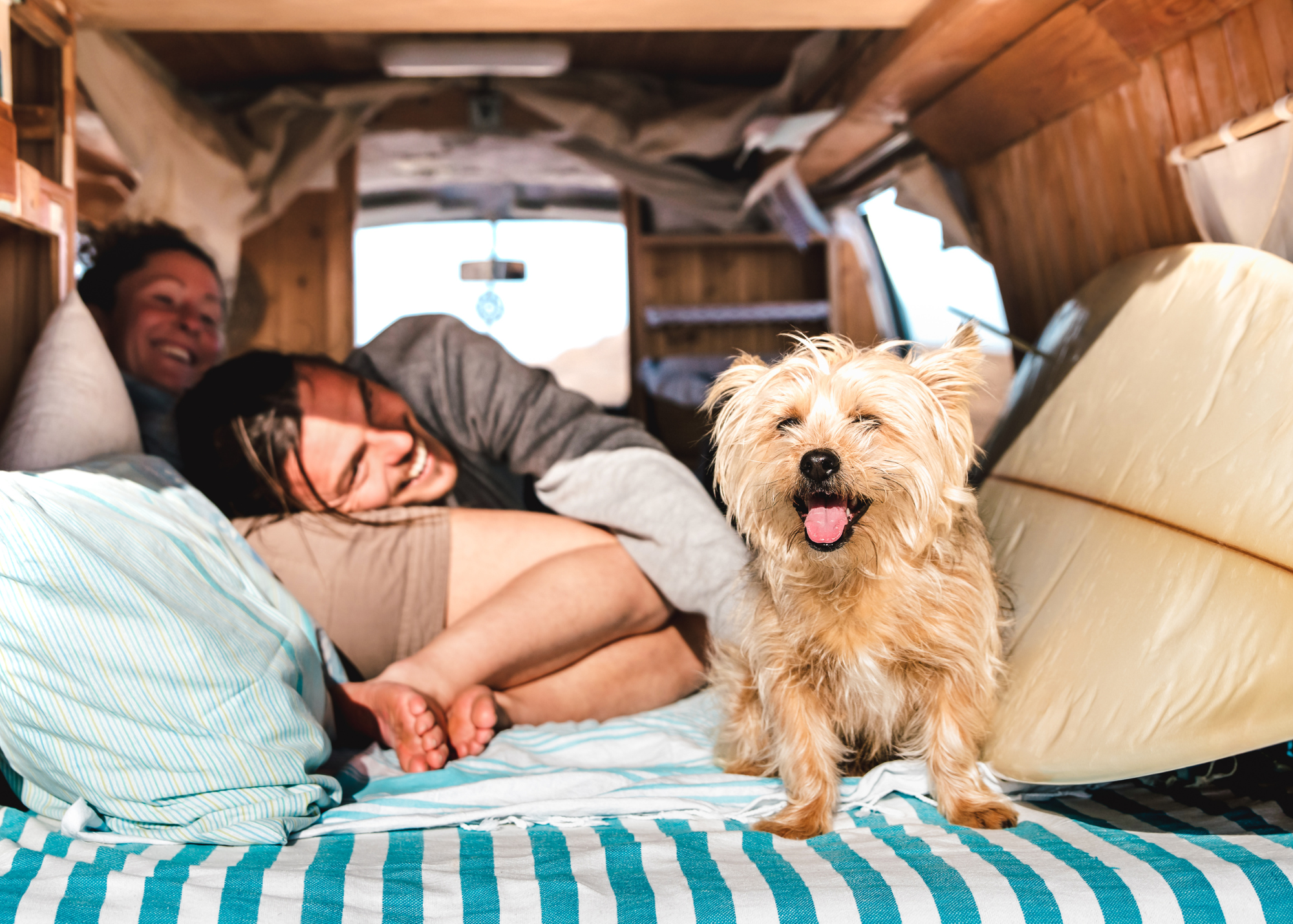
A practical guide to unforgettable RV adventures with your pet.
Bringing pets along in the RV is one of the best parts of the lifestyle—your whole family gets to experience the adventure together. With a little planning, you can keep your pets safe, comfortable, and calm on every trip.
Smart Packing for Pet Comfort
Packing thoughtfully for your pet helps them feel at home no matter where your RV takes you. A little advance planning—focused on familiar items, key health records, and easy-clean fabrics—can turn a small rolling space into a cozy, low‑stress retreat for both you and your pet.
- Bring Familiar Comfort Items: New environments can be stressful, especially for pets. Familiar scents and textures help. Pack your pet’s regular bed or a favorite blanket so they have a consistent “safe spot” in the RV. Bring a few favorite toys, chews, or puzzle feeders to keep them mentally engaged, especially on rainy days or long layovers. Stick with the same brand and type of food they eat at home to avoid stomach upset.
- Pack Pet Records and Health Documentation: Different states, campgrounds, and borders may require proof that your pet is healthy and vaccinated.
- Carry proof of rabies vaccination and any required local vaccines.
- Ask your veterinarian for a current health certificate if you’ll be traveling across state or country borders, will be gone for extended periods of time, or if you are entering certain protected parks or nature areas.
- Keep digital copies (photos or PDFs) of records on your phone plus a printed set in your RV—this helps in emergencies or if you need an urgent vet visit.
- Make Laundry as Pet-Friendly as Possible: Pet hair and muddy paws are part of RV life, but they don’t have to take over. Choose blankets, human bedding, duvet covers, dog beds, and mats that are machine washable and dryer friendly. This makes cleanup fast when you’re near a laundry room or have onboard laundry.
Safe Travel for Pets in RVs
When your RV is in motion, safety for everyone on board—pets and people alike—should be the top priority. By taking a few simple safety precautions every time you drive, you can reduce the risk of injury, stay more alert behind the wheel, and enjoy greater peace of mind for every mile of the journey.
- Use Crates or Carriers: Free-roaming pets can be distracting to the driver and at risk of injury if you stop suddenly. Use a sturdy crate or carrier that’s appropriately sized so your pet can stand, turn around, and lie down comfortably.
- Keep Identification Up to Date: Better safe than sorry when travelling with pets. If your pet does slip out a door or bolt at a fuel stop, clear identification can make all the difference in helping locate them. Make sure your pet wears a collar with an ID tag that includes your current contact number, not just a home address. Consider microchipping your pet and confirming that your contact details are updated with the microchip company before you leave. Many RVers also like GPS tracking collars or tags that connect to a smartphone app, so they can quickly locate a pet if they wander off in a new area.
- Store a Recent Photo on Your Phone: If your pet gets lost, having a clear, recent photo makes it easier to:
- Show campground staff and nearby campers.
- Create quick digital or printed “lost pet” flyers.
- Share on local social media or neighborhood apps.
Take a quick photo before each big trip—especially if your pet’s haircut, weight, or collar has changed.
- Plan for Frequent Stops: Long travel days are hard on pets. Aim to stop every 2–3 hours so pets can stretch, go to the bathroom, and drink water. Choose rest areas or large parking lots where it’s safe to walk them on a leash away from traffic.
At the Campsite with Pets
Once you’re parked, the focus shifts to giving your pet a safe, calm, and comfortable home base so they can settle in just as easily as you do. A little preparation at the campsite goes a long way toward keeping pets happy and healthy throughout your stay.
- Confirm Pet-Friendliness Before You Book: Not all campgrounds or parks welcome pets—or they may have restrictions. Check the campground’s website or call ahead to confirm pet policies, breed or size restrictions, number of pets allowed, and any extra fees. Ask about leash rules, off-leash parks, and quiet hours, especially if your pet is vocal or high energy.
- Protect Paw Health: RVs and campgrounds present surfaces that can be tough on paws. Make sure the treads on your RV’s exterior stairs are pet-safe—avoid sharp metal edges or open grids that could trap small paws or claws. In hot weather, test surfaces with your hand; if asphalt or concrete is too hot for your hand, it’s too hot for paws. In cold or icy conditions, watch for salt or de-icing chemicals that can irritate paw pads; and always wipe paws after walks.
- Keep Dirt Outside with Paw Stations: A simple setup by the door can keep your interior cleaner and more comfortable when travelling with pets. Place a mat, rug, or towels by the entry door to wipe paws before pets come inside. Keep a small bin or basket nearby with pet-safe wipes, an extra towel, and a brush for quick cleanups after muddy hikes or beach days.
- Create a Healthy RV Climate for Pets: Maintaining good ventilation and comfortable temperatures is essential for the health and comfort of both people and pets in the close quarters of an RV.
- Keep air moving with roof vents, fans, or your RV’s air conditioning system to prevent stuffiness and overheating.
- Close blinds or shades to reduce heat gain and provide a calmer environment.
- Make sure pets always have access to fresh air and water and never leave them in a closed RV in warm weather without proper temperature control and monitoring.
- Regularly change your RV’s air filters every 90 days of use to help reduce dander, hair, and dust.
- Consider investing in an air purifier to help improve air quality, especially if anyone in the RV has allergies or if you have multiple pets.
- Keep Unsafe Items Put Away: RVs have lots of tempting nooks and crannies for curious pets, so treat your interior like a rolling child‑proofed home. Secure trash cans so pets can’t access leftovers, bones, or food scraps that could make them sick. Store human and pet medications, cleaning supplies, and automotive chemicals in secured cabinets or overhead compartments where they are not accessible to pets.
- Locate a Local Veterinarian Upon Arrival: You don’t want to be searching for a vet for the first time in the middle of an emergency. When you arrive at a new destination, do a quick search for “veterinarian near me” and save the contact info for a nearby clinic and 24‑hour emergency animal hospital if one is available. If your pet has chronic conditions, carry a summary from your home vet so local veterinarians understand their medical history.
Traveling with pets in an RV can be incredibly rewarding. By securing them during travel, packing thoughtfully, and setting up a safe, comfortable campsite, you’ll make the journey less stressful for you and your animals—and far more enjoyable for everyone.